Headlines, primarily negative, race across my screen as I start today’s post on “Change.” It seems—more than ever—that our world is truly broken. (Perhaps it’s just me.)
Change is burdensome for many humans. Pre-COVID-19, it seemed as if many of us were somewhat complacent, buoyed by what we considered the rhythm of our blessed country. (Maybe I wasn’t aware enough.) The end of physical life has always been part of reality; hunger and abuse have always existed. However, the gargantuan pandemic and the ongoing murdering of fellow humans have heightened awareness of life’s fragility, reminding me that change is constant.
Change
Sometimes, change is heartbreakingly challenging: the physical loss of a loved one, divorce, the end of a career, or a significant health issue.
Sometimes, change is gradual: aging, clutter filling a home, the degradation of relationships, or the non-mending of something that hurt you.
Sometimes change is wonderful, exciting, and life-giving: being appreciated, a welcome new career, falling in love, and grandchildren.
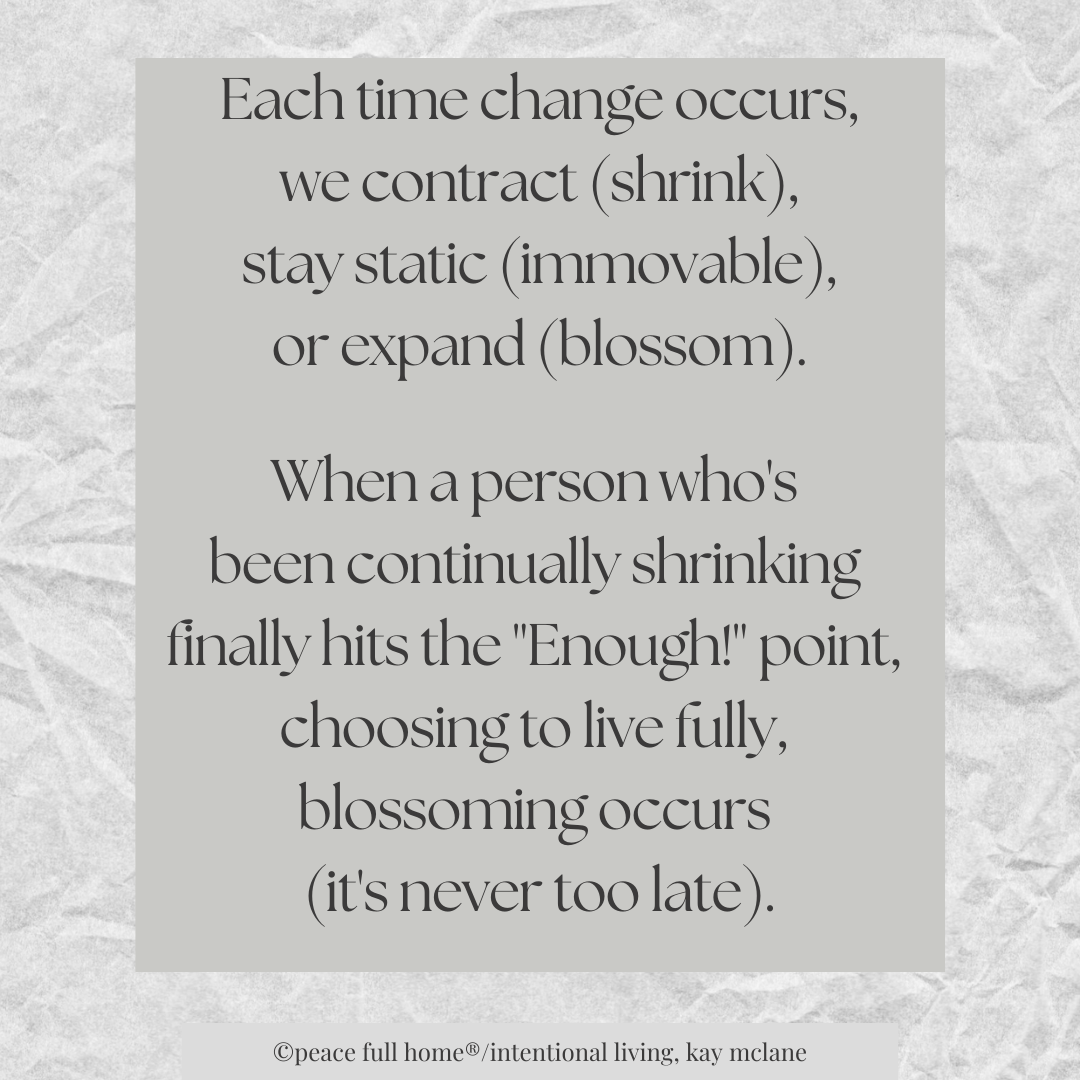
Each time change occurs,
we contract (shrink),
stay static (immovable),
or expand (blossom).
If you feel as if you’re continually shrinking (metaphorically, not physically) and finally hit the “ENOUGH!” point, you choose to live fully, and blossoming occurs (it’s never too late).
Some folks thrive on drama, feeling like they’re not truly living unless they have challenging or painful stories, seeming most comfortable with chaos, trading on “woe is me.” (How much of this melancholy do we create?) If your entire identity is a “sorrowful story,” change may be challenging. To reshape reality, we must step back, examine our lives, then make choices—not backing away or burying our heads in the proverbial sand but embracing new ways of thinking.
You can choose to stay in a horrible job because finding another one—a better one where you’re respected and appreciated—is too exhausting, or you can make an effort to create change.
You can view life as half-empty, holding onto hurts inflicted by others or manifest changes, filling your life with amazing people who value you.
You can look at the aging process with disdain and remorse or change your attitude and embrace your relationships, the knowledge you’ve gained on the journey, and the love you’ve experienced.
What changes have you had to deal with lately? Are there some you wish you had handled differently? Are there any you’re willing to share with someone else?
We can choose to change the way we move through life by:
• complaining less and being happy more?
• abandoning worrying about the future and embracing living in the moment?
• giving up being “bored” and challenging ourselves to find great things to do with our time?
• ceasing grumbling about “how it used to be “and beginning to learn something new?
• holding each other up instead of holding grudges
• minimizing the stressful things and magnifying the fantastic things?
• eliminating jumping to conclusions to start jumping for joy?
• releasing feelings of sorry for ourselves and reaching out to someone who could use a hand?
• banishing negative feelings and filling our minds with love and gratitude
We often think that if we take specific steps, we can make things happen the way we want, but change is inevitable and part of the journey. The illusion of control that many of us have is just that, an illusion. But, we can change ourselves to be our best selves; lights in a hurting world, harbingers of joy, and bearers of peace.
As Rumi wrote,
“Yesterday I was clever, so I wanted to change the world. Today I am wise, so I am changing myself.”
Wishing you a beautiful week,
Kay

 peace full home®—intentional living